At a glance
Emergency water extraction removes accessible standing water after the area and access have been assessed. It is an early stabilization task, not a guarantee that floors, walls or concealed materials are dry. Confirm attendance, charges, water-source correction and the separate plan for drying or contaminated-water cleanup.
Decide whether the area can be approached
Standing water around electrical equipment, unstable ceilings or other immediate hazards calls for appropriate safety assistance. Do not step into the water to discover its depth, unplug submerged equipment or move a machine. Tell the responding company what you can observe safely and contact the appropriate emergency service if there is immediate danger. A water extraction inquiry is not an emergency dispatch guarantee.
Explain whether the water is still entering and what source is suspected. A supply leak, appliance overflow, outside water and sewage-related event can require different decisions about access and material handling. Do not describe all water as clean because it appears clear. The contractor should assess the actual source and exposure rather than select a process based on appearance alone.
Confirm who is stopping the source and whether a plumber, electrician, utility or other qualified professional needs to attend. Extraction while water continues entering may not resolve the incident. Ask how the responding contractor handles that situation and what work can reasonably be authorized before the source is controlled. Keep the responsibilities separate so the homeowner knows which problem is being addressed at each stage.
Prepare a precise dispatch conversation
Give the complete street address and identify the affected level, rooms and access route. Mention stairs, locked areas, shared entrances, parking restrictions and any known electrical concerns. Explain when water was first noticed and whether the amount appears to be increasing, without entering an unsafe space to check. These details help the responding company decide what it needs to assess and whether it can accept the request.
Ask directly whether a crew is available for the exact address, what attendance arrangement is proposed and whom you can contact about changes. This website does not promise a response time or a reserved local crew. If the first contact cannot attend, do not assume an appointment exists because your details were recorded. Obtain a clear confirmation from the company accepting the work.
Clarify whether the visit is for assessment only or authorizes immediate extraction. Ask about attendance charges, after-hours fees and payment terms before relying on the arrangement. If another person must approve work, identify that person early. In a rental or shared building, the occupant's request may not authorize removal of building materials. Clear approval boundaries make urgent communication more useful without allowing an unspecified emergency label to replace written terms.
What pumps, extraction tools and meters actually do
Extraction equipment removes accessible liquid from the affected area. A pump handles pooled water; an extraction tool can remove water from reachable floor coverings or surfaces. Equipment selection depends on depth, access, the material and the water's assessed condition. No machine can make an unsafe entry safe or repair the leaking pipe while it removes the resulting water. Source control and electrical or structural assessment remain separate decisions.
Water may be held below a finish rather than sitting openly on top. An extractor passing over a floor does not verify the condition of its backing, pad, subfloor or adjoining wall. A moisture assessment follows those layers as far as the scope and access allow. The resulting material record is important because it tells the drying contractor where further work may be needed. A visually clear floor is an extraction observation, not a completion certificate for the structure.
The water source also affects the work method. An apparently clear puddle can have an uncertain exposure history, and outside flooding or sewage should not be treated as a routine clean-water incident. Ordinary air movement should not begin before contamination has been considered. The early objective is safe stabilization and removal where appropriate, followed by an explicit plan for remaining materials. The volume removed alone does not determine whether insulation, a concealed cavity or a finish can remain.
Why drying continues after the visible water is gone
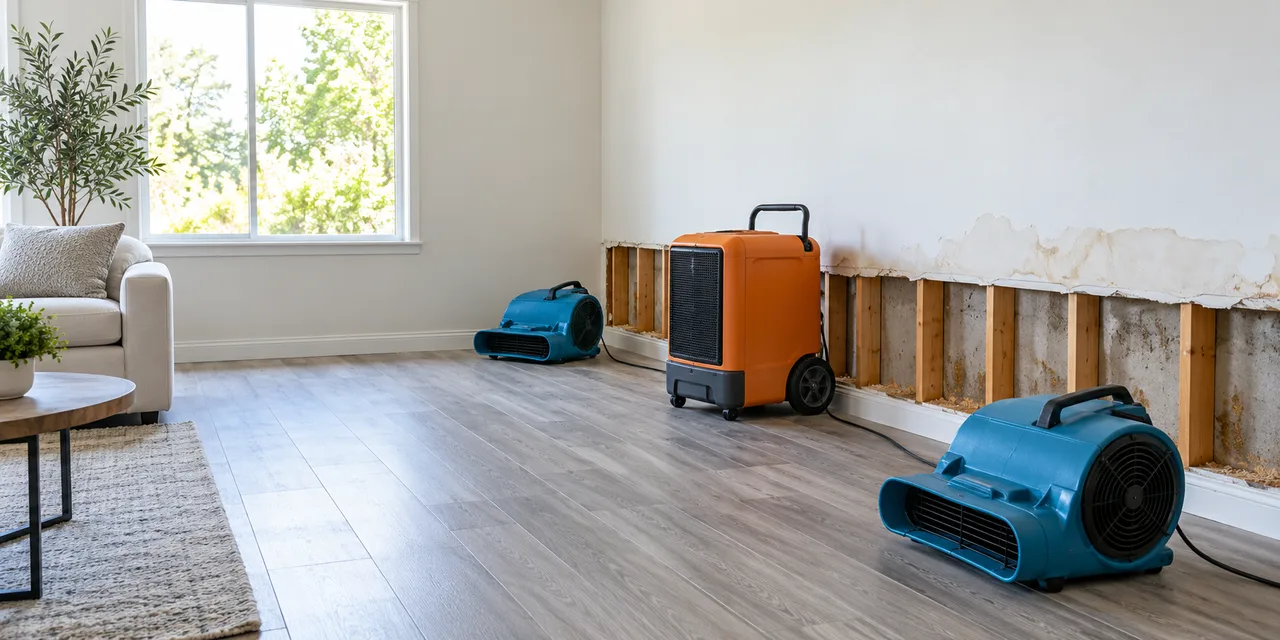
Extraction and drying are different stages because liquid can remain within materials after open water has been removed. Air movers support evaporation from suitable exposed surfaces; dehumidification addresses the moisture added to the air. The drying arrangement must account for the actual assembly and exposure rather than being selected by room size alone. A closed cavity may need investigation or controlled access before equipment can affect the wet material inside it.
Progress is assessed over time at documented locations. Meter readings need interpretation for the material and instrument, and a thermal image requires follow-up rather than being treated as proof by itself. There is no universal number of drying days that applies to every water loss. Material condition, access and whether moisture is continuing all change the decision. An attendance charge, an equipment-day rate and the assessment of drying completion describe different things.
The extraction-to-drying handover should identify what remains wet, which items were removed, where access is restricted and whether another trade must correct the source. If the first contractor only removes water, the homeowner needs an agreed route to the next stage rather than a vague assumption that the building will air-dry. Decorative repairs belong after the retained-material decision. Where contamination, growth or damaged components are found, the next service may be cleanup or replacement instead of routine in-place drying.
Control emergency charges and extra work
Urgency makes a concise written authorization especially important. Specify the initial task, any spending or scope limits and the process for additional work. Extraction, source repair, removal, drying, cleaning and rebuilding can be separate charges. A single emergency work signature should not leave you uncertain which of those stages you have approved.
Ask how equipment, labor, attendance and return visits are priced. Confirm whether the contractor charges for a minimum visit, transport, after-hours work or disposal. Where the extent is not yet known, request an explanation of how costs will be determined and when a revised scope will be provided. Avoid assuming a price discussed for visible water includes concealed damage or all later repairs.
Keep a record of communications, approvals and the work completed. If an insurer will be contacted, request its actual reporting requirements directly; this site cannot promise that emergency charges are covered. Ask the contractor for the records it will provide and clarify payment responsibility while a claim is pending. Check the contractor's required license and insurance, and ask who is responsible if another company performs the follow-up drying or repair.
Use an extraction-to-restoration handover
After the extraction stage, request a short account of the rooms treated, the source status and remaining concerns. Ask what further assessment is recommended and which tasks are outside the extraction agreement. That account helps you decide whether to arrange drying, sewage cleanup, mold assessment or material repairs without assuming every next step is mandatory for every incident.
If flooring or wall sections were opened, confirm how the area will be protected until the next contractor attends. Ask who is responsible for contents that were moved and what spaces remain restricted. A handover should include practical access information, not just an invoice naming a machine. Identify the person you can contact if water returns or the planned follow-up cannot take place.
Keep photographs taken safely and the written scope together with the extraction record. When arranging broader water damage restoration, share those records so the next contractor understands what has already been done. Extraction is successful within its agreed scope when accessible water removal and its limitations are clearly documented. The broader goal of restoring the property requires assessment of materials and completion of the relevant next stages, not merely removal of standing water.
Water removal is not the same as a finished repair
| Situation or stage | What it addresses | Important limit |
|---|---|---|
| Pooled water on an accessible surface | Extraction removes the reachable liquid after safe-access assessment. | It does not establish that layers beneath are dry. |
| Wet material without visible puddles | A moisture assessment and drying or removal decision. | A pump has no useful role in a hidden damp layer alone. |
| Unknown or contaminated exposure | An appropriate contamination-aware cleanup scope. | Household fans are not the first decision. |
| Deteriorated finishes after removal | Repair planning once the material conditions are understood. | Extraction does not include rebuilding unless contracted. |
Typical work sequence
- Describe the source, water location and hazards from a safe place.
- Confirm the actual visit arrangement and emergency authorization boundary.
- Remove reachable water with methods appropriate to the assessed exposure.
- Transfer the material findings to the drying, cleanup or repair stage before closing the loss.
The actual sequence depends on the assessed property and the hired contractor's written scope. These are planning stages, not an appointment or completion-time promise.
When to Discuss Emergency Water Extraction
Fast extraction can limit the spread of moisture, but drying and material assessment still matter. Discuss the water source, affected rooms and how long materials have been wet before arranging service.
Signs Your Property May Need Attention
- Standing water on hard floors or carpet
- Wet baseboards or lower wall sections
- A recent burst pipe, appliance leak or overflow
What the Service May Include
- Extract accessible standing water
- Set drying equipment based on affected materials
- Monitor moisture and identify materials that may need removal
Benefits of Emergency Water Extraction
- Removing accessible standing water starts the cleanup process and helps the contractor assess the exposed materials.
- A documented extraction scope identifies which rooms, surfaces and contents are included.
- Planning extraction and drying together makes the follow-up work easier to confirm before equipment is placed.
Limitations and Risks
- Extraction does not establish that carpet backing, wall cavities or subfloors are dry. Follow-up assessment may be needed.
- A burst pipe, roof leak or appliance failure may still require a separate repair.
- Response times depend on contractor availability. Electrical concerns and contaminated water can also affect the work plan.
Questions Before Hiring a Contractor
- Is the water source stopped?
- How long has the area been wet?
- Are carpet, padding or lower walls affected?
Costs and Work Terms
Pricing depends on the assessed property, affected materials, urgency, access and the contractor's written scope. Confirm any assessment charge, exclusions, payment terms, license and insurance before approving work.
Frequently Asked Questions
Is water extraction enough to finish the job?
Not usually. It removes standing water, while drying and material assessment address remaining moisture. Confirm equipment needs and follow-up checks before considering the work complete.
How quickly can an extraction contractor arrive?
Availability varies with the property location, current workload and access conditions. Call to confirm the actual response time and any attendance charge; this website does not promise a fixed arrival time.
Can fans be used immediately after any water event?
Not every water event is suitable for the same drying approach. EPA clean-water guidance cautions against using fans before determining that the water is sanitary. Let an appropriate professional assess suspected contamination.
Homeowner Resources
- EPA: Water Damage Cleanup and Mold Prevention
- FLIR manufacturer guidance: thermal imaging and moisture confirmation
General AI-assisted homeowner guidance published by ClearHaven Restoration, a contractor-connection website, not a restoration contractor. References support the safety, sampling and equipment explanations; they do not certify this website or a contractor. This guide is not a property assessment. How this information is prepared.