At a glance
Mold remediation addresses identified growth and affected materials, together with a plan for the underlying moisture problem. It is different from inspecting a property or collecting samples. A useful scope defines the work area, contents handling, removal or cleaning, verification arrangements and repairs that are not included.
Match the service to the actual decision
If you already have an assessment describing affected areas, ask a remediation contractor to explain how its proposed work responds to those findings. If the concern is only an unexplained odor or uncertain stain, an inspection may help define the problem before a removal contract is appropriate. Request a reasoned scope, not a treatment package selected solely by a photograph or room count.
EPA guidance emphasizes addressing moisture along with mold. Ask what is known about the moisture source and which corrective tasks fall outside the cleanup contractor's role. Roof repairs, plumbing corrections and building ventilation work may need another qualified trade. A scope that lists cleaning but says nothing about the unresolved water problem leaves an important question unanswered.
Do not use a cleanup quote to interpret health symptoms or decide whether an individual can occupy the property. Those questions need appropriate professional advice. Explain relevant access concerns to the contractor without sharing unnecessary personal medical details. This guide helps organize property and contract questions; it does not diagnose illness, establish an exposure threshold or certify that any particular room is safe.
Cleaning, removal and containment have different jobs
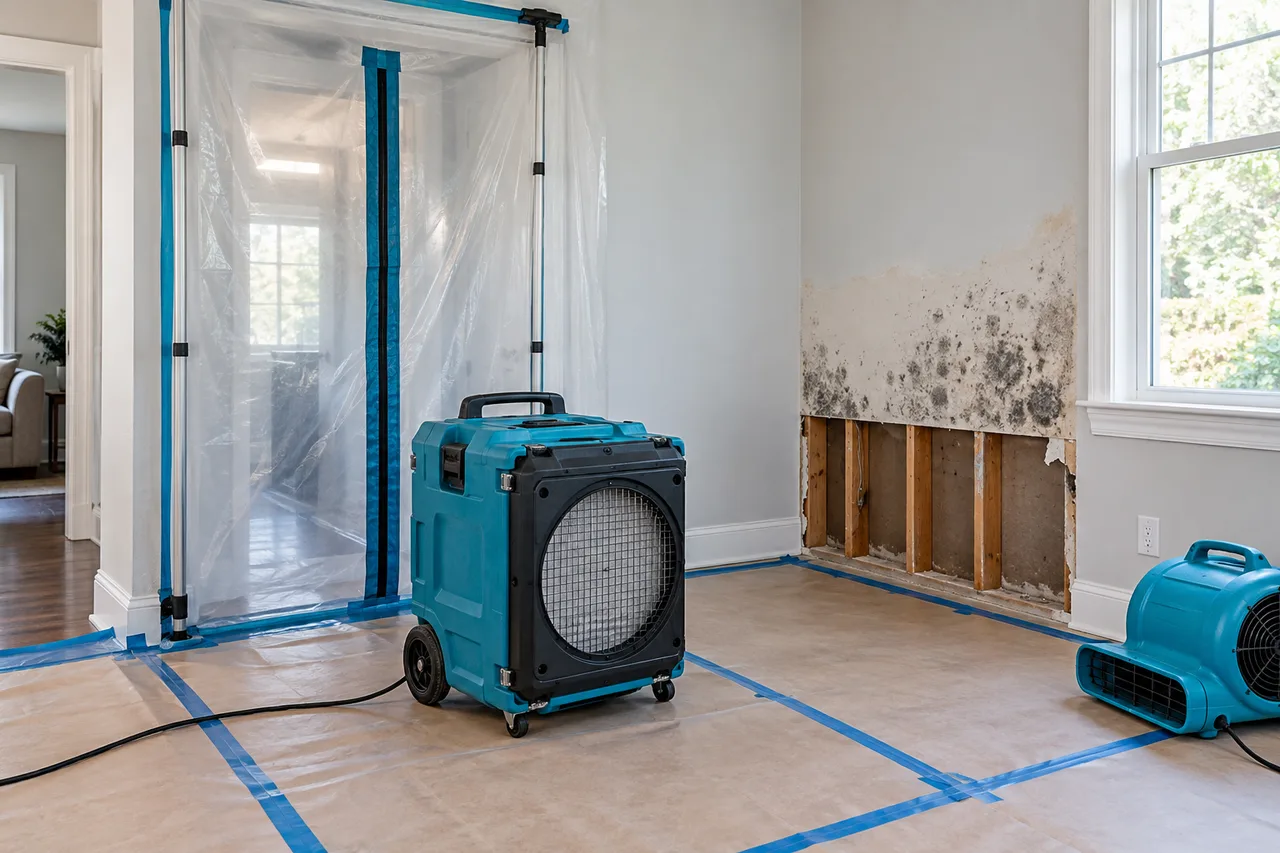
Remediation is not a single spray applied to everything in a room. The work method depends on the affected material, access and the extent of growth. A cleanable hard surface and a mold-affected porous finish may need different handling. Containment separates a work area from adjoining spaces during disturbance; it does not repair the leak that supported the growth. Contents protection, debris handling and final cleaning must be considered alongside the building materials.
A chemical treatment is not a substitute for physically addressing affected material. Painting over growth is also not a complete cleanup. Where a porous component cannot be effectively cleaned, removal may be necessary. Where a retained surface is appropriate for cleaning, the aim is to address the growth and the remaining moisture conditions, not simply mask an odor. The exact work boundary needs an assessment rather than being inferred from the darkest visible patch.
Air-filtration equipment can be part of a work-area plan, but the presence of a machine does not by itself establish that the rest of the building is protected. Its purpose, containment layout and handling of removed material need to work together. Suspected HVAC involvement changes the investigation because a room-level cleanup may not address the connected system. Electrical, structural or hazardous-material concerns can require other specialists. Remediation planning should identify these interfaces before surfaces are disturbed.
Plan around occupants and belongings
Before a start date is agreed, identify rooms that will be restricted and the routes workers will use. Ask whether belongings must be moved, which party moves them and where they will be stored. Separate unaffected items from items needing assessment. A contents plan can prevent confusion about what is being cleaned, discarded, transferred to a specialist or simply kept out of the work area.
For belongings marked for disposal, request an item record and the reasoning for the decision. Ask whether photographs, descriptions or approvals are needed before removal. Where a specialist cleaning option is proposed, confirm who performs it, what is included in the charge and whether successful restoration of appearance is promised or uncertain. Building remediation does not automatically include every personal item.
In a rental, condominium or shared building, confirm who can authorize changes to walls, finishes and common systems. Inform the property manager about access and coordination needs. The cleanup contractor cannot resolve every ownership or permission issue on the homeowner's behalf. Agree who communicates schedule changes to occupants and who answers questions if the work area needs to expand. Keep those responsibilities separate from the technical removal plan.
What a meaningful completion check includes
The first completion question is whether the agreed affected materials have been addressed and the moisture cause corrected or assigned to an outstanding repair. The work area should be compared with the documented scope, including contents handling, debris removal and retained surfaces. An attractive paint finish is not evidence that concealed growth was addressed. Likewise, an invoice for treatment is not an inspection report for every room in the building.
Sampling is a separate decision. EPA explains that visible growth usually does not require testing and that federal airborne mold limits have not been established. A sample can help answer a defined question, but a result should not be presented as a universal health clearance. If post-work sampling is part of the agreement, its locations, method, interpretation and limitations should be settled before the work rather than selected after a disputed result.
The completion record should distinguish observations from conclusions and identify areas that were not accessible. Photographs of the work boundary and a description of removed or retained materials can help a later repair contractor. No single document guarantees that a future leak will not create new growth. A recurring odor, stain or moisture concern calls for reassessment of the source and affected areas. Repainting, applying fragrance or repeating treatment without investigating moisture leaves the original decision unresolved.
Compare remediation costs without false precision
The assessed extent, material types, access, contents handling and need for opening or rebuilding can all affect a remediation price. Compare scopes using those details instead of assuming that a price per room or per visible patch describes the complete job. Ask whether equipment, protection, disposal, monitoring, verification and return visits are included or separately billed.
Confirm whether the contractor's price includes correcting moisture, replacing removed board, repainting or reinstalling fixtures. Those exclusions can be larger than the cleaning line itself. Request written terms for additions discovered during the work, deposits, payment milestones and cancellation or scheduling conditions. Do not assume a telephone discussion fixes the final cost before the contractor has assessed the actual property.
Check the contractor's required license and insurance directly and discuss who is responsible for subcontracted tasks. Ask for examples of the documents you will receive, not fabricated testimonials or unspecified claims of certification. A useful comparison tells you which company can explain its proposed process, boundaries and accountability. ClearHaven does not warrant contractor work, set contractor fees or promise that a specific company is available in your city.
Keep moisture follow-up separate from cosmetic finishing
After cleanup, confirm which source corrections have been completed and which remain outstanding. Closing a wall or repainting should fit the agreed assessment and repair sequence. Ask the rebuilding contractor what information it requires from the remediation team, including the removal boundary and relevant findings. This handover is especially important when cleanup and reconstruction are performed under separate agreements.
Keep the final scope, changes, contents decisions and verification records together. Ask for the actual terms of any warranty and whether they address workmanship, products or a limited task. A warranty should not be assumed to cover new leaks, condensation problems or other moisture events unrelated to the contracted work. Record follow-up actions and the party responsible for each one.
If visible growth or the original moisture concern returns, describe the location and circumstances when requesting reassessment. Do not assume recurrence means that repeating the same surface treatment will solve it. The source, affected materials or earlier scope may need review. An effective follow-up conversation compares new observations with the original records so that the next decision is based on the property rather than on a generic promise to eliminate mold forever.
Do you need inspection, sampling or removal?
| Situation or stage | What it addresses | Important limit |
|---|---|---|
| Unexplained odor or uncertain staining | Inspection defines accessible conditions and possible moisture paths. | Not every discoloration is confirmed mold. |
| Visible growth with an identified moisture concern | A material-specific remediation scope addresses the affected area. | Routine sampling may not change the required work. |
| A question that genuinely requires laboratory evidence | Purposeful testing with an interpretation plan. | A sample is not whole-building clearance. |
| Growth returning after prior cleanup | Reassess the moisture cause and inaccessible adjoining materials. | Another surface treatment alone may not resolve the cause. |
Typical work sequence
- Define the affected area and the moisture problem before selecting a treatment.
- Plan work-area separation, access and contents handling for the assessed conditions.
- Clean or remove affected materials using an appropriate professional scope.
- Review the work, moisture responsibilities and any agreed verification before decorative repairs.
The actual sequence depends on the assessed property and the hired contractor's written scope. These are planning stages, not an appointment or completion-time promise.
When to Discuss Mold Remediation
Mold work should focus on both the growth and the moisture condition that allowed it. A contractor can discuss containment, removal of affected porous materials, cleaning of remaining surfaces and practical steps to reduce recurrence.
Signs Your Property May Need Attention
- Visible spotting or fuzzy growth
- Persistent musty odor after a leak
- Water-damaged porous materials that stayed wet
What the Service May Include
- Set containment appropriate to the affected area
- Remove or clean affected materials based on condition
- Discuss the moisture source and drying requirements
Benefits of Mold Remediation
- A defined remediation scope identifies the affected materials, work area and cleanup responsibilities before work starts.
- A contents and disposal plan helps the homeowner understand what will be retained, moved or removed.
- Including follow-up moisture correction in the discussion makes the cleanup plan more complete.
Limitations and Risks
- Remediation is not a promise to eliminate every mold spore. Moisture control remains necessary after cleanup.
- Affected porous materials may require replacement, and cleanup may not restore their original appearance.
- Access restrictions, contents relocation and repair work can add disruption or separate charges.
Questions Before Hiring a Contractor
- What areas will be contained?
- Which materials can be cleaned and which must be removed?
- How will the moisture source be addressed?
Costs and Work Terms
Pricing depends on the assessed property, affected materials, urgency, access and the contractor's written scope. Confirm any assessment charge, exclusions, payment terms, license and insurance before approving work.
Frequently Asked Questions
Is mold remediation the same as mold testing?
No. Remediation addresses growth and affected materials; testing collects and interprets samples for a defined purpose. The contractor should explain whether sampling would change the work plan.
Can mold return after remediation?
Yes, if the moisture problem remains or develops again. EPA guidance emphasizes addressing the water problem along with the growth. Ask which moisture corrections are included and which require another contractor.
What should a mold remediation scope include?
Request the affected areas, containment approach, materials to be removed or cleaned, contents handling, disposal, follow-up checks and repair exclusions in writing.
Homeowner Resources
General AI-assisted homeowner guidance published by ClearHaven Restoration, a contractor-connection website, not a restoration contractor. References support the safety, sampling and equipment explanations; they do not certify this website or a contractor. This guide is not a property assessment. How this information is prepared.