At a glance
Water damage restoration is the coordinated assessment, removal of water, drying, cleanup and repair of affected building materials. Extraction is one stage, not the entire job. A useful plan explains the water source, what can be retained, how progress will be checked and which repairs are excluded.
Choose the right scope for the loss
Start with the problem you need resolved, rather than a package name. An overflowing appliance, a leaking roof and water entering from outside can leave different materials affected and require different source repairs. Describe what you actually observed: where water appeared, when it was noticed, whether it is continuing and which rooms can be accessed safely. Avoid guessing the extent of hidden damage from a single stain or a photograph.
A restoration proposal should distinguish investigation, emergency stabilization, water removal, drying, cleaning and rebuilding. Ask which stages the responding company performs itself and which it would refer to another trade. If a plumber has stopped a pipe leak, that does not establish that the walls or floor are dry. Equally, running drying equipment does not repair the pipe. Assign a responsible party to each unresolved task.
For a limited incident, request a defined affected-area assessment rather than automatically authorizing whole-property work. For damage across several rooms, ask for a room-by-room scope that identifies shared walls, connected floor assemblies and contents. That breakdown makes exclusions easier to spot and gives you a practical way to compare proposals without assuming the lowest total covers the same work.
Prepare for the first conversation safely
If there is immediate danger, contact the appropriate emergency service. Do not enter standing water around electrical equipment, stand below a sagging ceiling or handle materials exposed to sewage. An ordinary phone inquiry cannot determine whether a building is safe to enter. Explain these concerns before a visit so the responding contractor can identify whether another qualified professional needs to attend first.
From a safe location, gather the property address, contact details, approximate time of discovery and any observations about the source. Existing photographs may help describe the rooms, but taking new pictures is not worth entering an unsafe space. Mention inaccessible rooms, stairs, pets, mobility needs and any restrictions on building access. If the property is rented or shared, identify who is authorized to approve work and who must be notified.
Keep an incident record separate from the contractor's paperwork. Note whom you contacted, what was authorized and when follow-up is expected. Ask whether the first visit is an assessment, emergency work or both, and what attendance charges apply. A call does not reserve a crew or confirm coverage. Confirm the specific address, proposed arrival arrangement and contact person directly before relying on an appointment.
How moisture mapping and controlled drying work
A water stain describes a surface, not the whole wet assembly. Water can move under flooring, along framing and into the room below. An assessment follows that path and records the affected materials. Moisture meters help compare suspect locations with appropriate reference areas. Thermal imaging can locate temperature differences worth investigating, but a thermal image alone does not prove that a material is wet or identify mold.
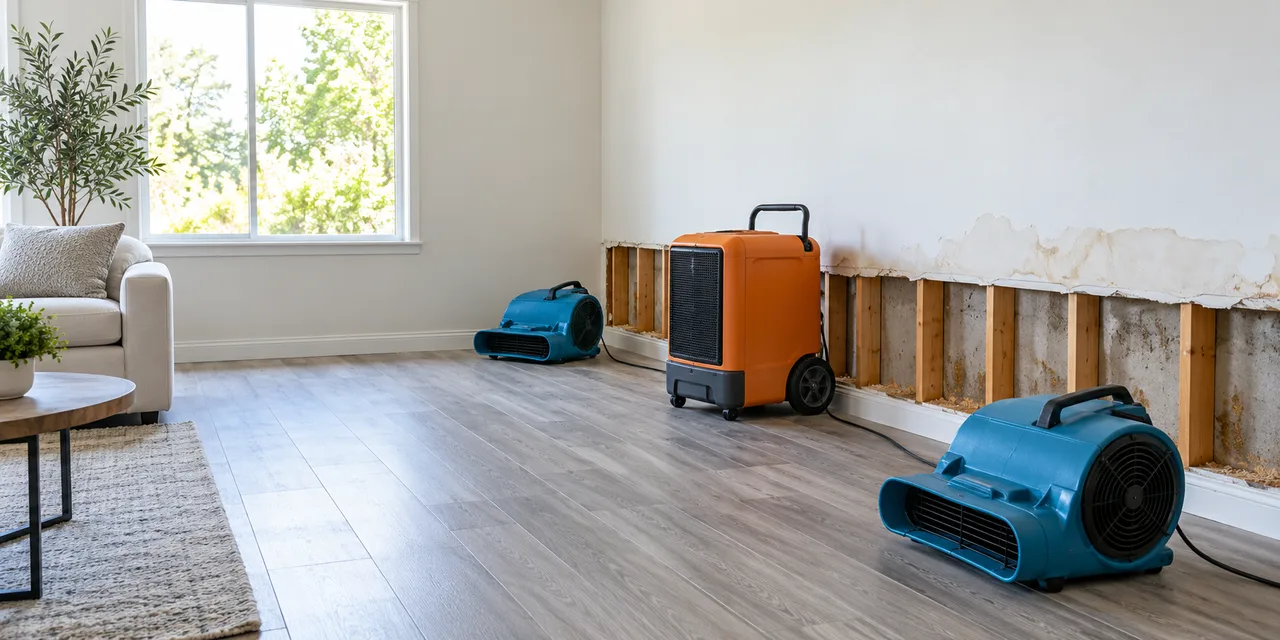
Extraction removes accessible liquid; air movement and dehumidification address moisture remaining in materials and the surrounding air. An air mover increases evaporation at an exposed surface. A dehumidifier removes moisture from the air so that evaporation can continue. Those functions are complementary rather than interchangeable. A room can have a dry floor surface while a subfloor or wall cavity still needs attention. Equipment placement depends on access, the assembly and the assessment, not simply the number of rooms.
Progress is evaluated using repeat observations and material readings at recorded locations. There is no single household moisture number that applies to every type of wall, wood product or meter. Results need interpretation against the material and the conditions being measured. A fixed number of equipment days is a billing arrangement, not proof of completion. Rebuilding follows a material-condition decision; it should not conceal an assembly merely because the visible puddle has disappeared.
Repair versus replacement by material
Three separate questions guide salvage: what contacted the material, whether its structure remains sound and whether all affected layers can be reached for appropriate treatment. A clean supply-line incident discovered promptly is not the same problem as wastewater or outdoor flooding. Appearance and lack of odor do not establish that unknown water is sanitary. The source and exposure history therefore belong in the assessment before ordinary drying methods are selected.
For clean-water damage, intact wallboard may sometimes remain, while swollen board, failed seams or deteriorated material changes the decision. A finish can hide damage underneath: lifting flooring or opening a wall may be necessary to inspect a concealed layer. These are assessment-led choices, not a universal instruction to remove every wet wall or retain every hard surface. Wet insulation, damaged manufactured wood and contents can require different handling from framing or masonry. EPA's clean-water material guidance is a useful starting point, not a prescription for contaminated losses.
Cleaning, structural drying and reconstruction also have different end points. Cleaning addresses the affected surfaces and materials; drying addresses residual moisture; reconstruction reinstates the building finishes. A sound framing member may remain while the surrounding finish is replaced. Furniture, documents and electronics need their own decisions rather than being grouped into a drywall price. Recording the reason for each retained or removed material makes the repair boundary understandable and helps a rebuilding contractor continue the work.
Compare charges and change orders
Compare proposals by included work, quantities and exclusions, not just by the final number. One contractor may include monitoring and debris removal while another lists them separately. Ask whether equipment is charged per day, what determines additional days and whether return visits are included. Clarify attendance charges, after-hours charges, access-related work and the treatment of materials discovered after the initial assessment.
Use written approvals for changes. If opening a ceiling reveals additional damage, ask for the new findings, revised scope and price before authorizing work beyond the existing agreement, except where an agreed emergency authorization applies. Keep the authorization boundary specific. A discussion about possible damage is not the same as approving every repair that could follow.
If you intend to contact an insurer, ask the insurer directly about reporting, documentation and policy requirements. This website cannot interpret a policy or guarantee payment. Contractor invoices and photographs can support a conversation, but they do not establish coverage. Agree with the contractor about who is responsible for payment if a claim is delayed, disputed or not covered. Keep copies of the signed scope, changes, invoices and any communications that affect the agreed work.
Plan a useful completion handover
Before considering the job complete, walk through the agreed areas with the responsible contractor when access is safe. Compare completed tasks against the written scope, including cleanup, contents handling and repairs. Identify unfinished work separately from cosmetic preferences, and ask who will address each item. A handover should make responsibilities clearer, not leave the homeowner guessing which trade is returning.
Request the relevant assessment and drying records, a list of removed materials, repair information and any written warranty terms that actually apply. Ask the contractor to explain what those records establish and their limitations. A drying record is not a promise against future leaks, and a cleanup invoice is not a whole-property inspection. Keep information about the moisture source repair alongside restoration paperwork.
Finally, agree on a contact route if the original stain, odor or moisture concern returns. Continued problems call for reassessment of the cause rather than repeated cosmetic treatment. Record suggested follow-up tasks, such as a separate roof or drainage inspection, without assuming they are included in the restoration price. ClearHaven's role is to help homeowners discuss independent contractor connections; the hired contractor remains responsible for its own assessment, work and contractual commitments.
What each stage actually delivers
| Situation or stage | What it addresses | Important limit |
|---|---|---|
| Source correction | Stops the pipe, roof, appliance or drainage failure. | Does not dry materials already affected. |
| Extraction | Removes accessible standing water. | Does not verify that cavities or subfloors are dry. |
| Controlled drying | Addresses moisture in assessed materials and air. | Does not restore damaged paint, board or flooring. |
| Reconstruction | Reinstates agreed building finishes after assessment. | Does not correct an unresolved moisture source. |
Typical work sequence
- Establish safe access and identify the source before entering affected spaces.
- Record the water path, exposure and material condition; remove accessible water where appropriate.
- Select cleaning, removal and drying methods for the assessed assembly, then monitor progress.
- Review retained materials and unresolved repairs before rebuilding and keep the completion records.
The actual sequence depends on the assessed property and the hired contractor's written scope. These are planning stages, not an appointment or completion-time promise.
Water Damage Cleanup and Restoration
Water damage can affect ceilings, walls, floors and enclosed spaces. ClearHaven Restoration connects homeowners with independent contractors to discuss the water source, affected materials and appropriate restoration work.
Restoration Work May Include
- Assessment of the water source and affected areas
- Standing water extraction and structural drying
- Cleanup or removal of affected materials
- Repair of damaged ceilings and drywall
- Assessment of mold or sewage-related cleanup needs
Benefits of Water Damage Restoration
- A coordinated scope connects water removal, drying and repairs, so the homeowner can see which tasks are included and which require another trade.
- Documenting affected rooms and material conditions gives the homeowner a record to compare with the proposed restoration scope.
- Discussing the moisture source alongside the visible damage helps identify follow-up plumbing, drainage or building repairs.
Limitations and Risks
- Cleanup does not automatically include leak repair, replacement of belongings or reconstruction. These tasks should be listed separately in the agreement.
- Drying equipment creates noise and uses electricity. Access to affected rooms may be restricted while the contractor monitors materials.
- Water near electrical equipment, structural damage and suspected contamination require an appropriate assessment before cleanup begins.
Specialized Water Damage Services
- Ceiling Water Damage Repair
- Mold Remediation
- Mold Testing
- Sewage Backup Cleanup
- Mold Inspection
- Emergency Water Extraction
- Basement Mold Removal
- Water Damaged Drywall Repair
- Closet Mold Removal
- Flooded Basement Cleanup
Discuss Your Property
Share when the damage began, which rooms are affected and whether the water source has been controlled. Confirm contractor availability, assessment charges, scope, license and insurance before arranging work.
Frequently Asked Questions
What is the difference between water removal and restoration?
Water removal deals with accessible standing water. Restoration is the broader scope, which may also include drying, cleaning, removal of damaged materials and repair. Confirm the included stages before approving work.
How much does water damage restoration cost?
The affected area, water source, material condition, access, equipment needs and repair scope all influence the price. Ask for written charges and confirm whether drying checks and reconstruction are included.
Can every water-damaged material be saved?
No. A contractor must consider the material, damage and contamination. Some items may be candidates for drying; others require removal. A dry-looking surface alone does not establish that the underlying material is ready for repair.
Homeowner Resources
- EPA: Water Damage Cleanup and Mold Prevention
- CDC: Reentering Your Flooded Home
- FLIR manufacturer guidance: thermal imaging and moisture confirmation
General AI-assisted homeowner guidance published by ClearHaven Restoration, a contractor-connection website, not a restoration contractor. References support the safety, sampling and equipment explanations; they do not certify this website or a contractor. This guide is not a property assessment. How this information is prepared.